
Though the "eye of the storm" is away from land, the cyclone's outer periphery would leave its impact on the coast.

The IMD said that the impact of Vayu had led to heavy to very heavy rainfall in isolated places in Saurashtra, while the entire state received scattered rainfall on Saturday.

Teams of the National Disaster Response Force started landing in Gujarat with the help of the Indian Air Force to undertake preventive evacuation of people living on the west coast, an IAF official said.

Chief Minister Vijay Rupani said people living in the coastal belt would be shifted to safer places.
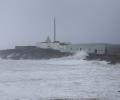
Cyclone Vayu was to hit the Gujarat coast on Thursday, but it changed course on the intervening night of Wednesday and Thursday.
By June 14, the monsoon should have reached central India. But this year it hasn't even covered Karnataka properly or entered the Northeast.

By now, monsoon should have reached the central India, including parts of Madhya Pradesh, Rajasthan, eastern Uttar Pradesh and Gujarat, but it is yet to reach Maharashtra.

'Storms push a lot of water into land, then there is heavy rainfall due to the cyclone.' 'Along with this, we see the gradual rising of the sea level.' 'We see this during and after the latest Cyclone Tauktae.' 'This kind of overlapping events are increasing and we do not know much about how to tackle them.'

The World Meteorological Organisation/Economic and Social Commission for Asia and the Pacific Panel on Tropical Cyclones, at its twenty-seventh session held in 2000 in Muscat, Oman, agreed to assign names to the tropical cyclones in the Bay of Bengal and Arabian Sea.
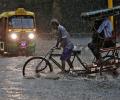
As the month ended with 33 per cent deficiency, which translates to around 67 per cent of the Long Period Average, several parts of the country have been witnessing drought-like situation.
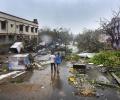
The displacements were a result of a combination of increasing hazard intensity, high population exposure and high levels of social and economic vulnerability, a report says.

Better living conditions must be an integral part of all political campaigns. But this will only happen if the public pressures the political class to understand the irreversibility of climate change and make the environment a crucial part of their manifestos.

The southwest monsoon has started on a weak note and this has delayed the sowing of kharif crops. Though a cause for concern, the situation hasn't reached a stage where it warrants any panic response. Moreover, according to meteorologists and industry players, monsoon rains will witness a revival in the coming few weeks.
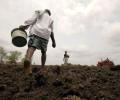
Till June 30, the southwest monsoon was 33 per cent lower than normal, which is among the worst in the last five years, with 28 of the 36 meteorological divisions recording deficient rain.

Officials said good rain in August - though it might not improve acreages much for most crops except urad, moong, and paddy - would help in improving yields in the crops already planted.
 © 2026 Rediff.com - Advertise with us - Disclaimer - Privacy Policy - Sitemap - Feedback - About us - Terms of use - Grievances